
Professional OEM Camera Modules and 2k camera price Guide
When integrating high-definition visual systems into commercial hardware, the balance between image fidelity and hardware cost is a critical engineering challenge. For many B2B buyers, understanding the factors that influence 2k camera price is not just about finding the lowest number, but about evaluating the total cost of ownership versus the technical output. High-resolution imaging, particularly in the 1080P to 2K range, requires a precise synergy between the sensor module, lens optics, and the UVC protocol for seamless integration.
Shenzhen Minyou Digital Technology specializes in bridging this gap by providing professional OEM/ODM camera modules that deliver Full HD clarity without the unnecessary overhead of consumer-grade peripherals. Whether you are developing a facial recognition kiosk, an industrial inspection tool, or a high-end conference system, the choice of a fixed-focus or autofocus module directly impacts both the final product's performance and its market competitiveness.

Technical Architecture of Full HD Image Acquisition Systems
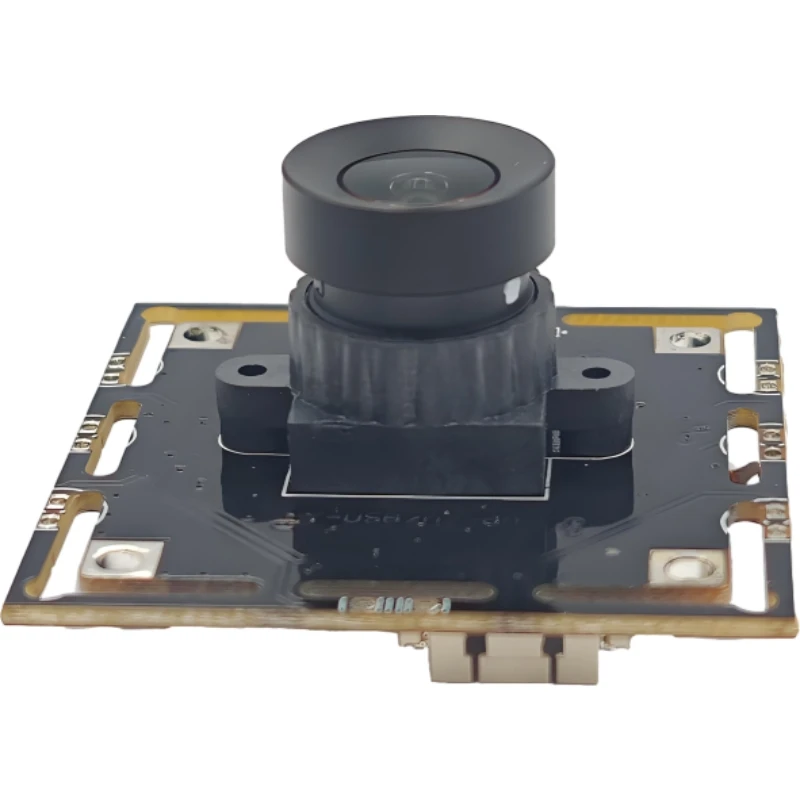
The core of a professional imaging module lies in its ability to maintain true color reproduction and high resolution across varying environments. A 1080P Full HD webcam, such as the one produced by Minyou, utilizes a standard UVC protocol, ensuring that the device is "Plug and Play" across multiple operating systems including Windows XP/7/8/10+ and Linux. This eliminates the need for proprietary drivers, which significantly reduces the software development cycle for OEM partners.
From an engineering perspective, the fixed-focus lens design is often preferred for specific industrial applications where the distance between the subject and the camera is constant. This design provides a stable field of view and reduces mechanical failure points. Furthermore, compatibility with software like OBS, Skype, and Xsplit allows these modules to be integrated into diverse streaming and communication ecosystems without additional middleware, making them ideal for laptops, desktops, and embedded AI devices.

Evaluating Performance Metrics for Commercial Camera Procurement
Procurement managers must look beyond the raw pixel count when evaluating visual hardware. While resolution is a primary driver, the "True Color" capability and the ability to perform in different lighting environments are what define the actual utility of the sensor. For instance, a camera that supports a wide dynamic range (WDR) is essential for facial recognition in areas with strong backlight, a feature common in Minyou's advanced sensor lines.
Another critical consideration is the interface. USB 2.0 remains the standard for most 1080P applications due to its ubiquity, but for higher-bandwidth 2K or 5MP requirements, USB 3.0 modules become necessary to avoid frame rate drops. When analyzing the 2k camera price, one must account for the sensor's efficiency, the quality of the glass optics, and the certification standards (such as CE, FCC, and CCC) that ensure the product can be legally and safely exported to North American and European markets.
Industrial Application Scenarios and Integration Logic
The versatility of USB camera modules allows them to be deployed across a spectrum of intelligent use cases. In the realm of AI-driven hardware, these sensors serve as the "eyes" for gesture recognition, sitting posture detection, and autonomous tracking systems. The integration logic typically follows a path from raw image capture via the MIPI or USB interface, followed by processing through an AI algorithm, and finally triggering a hardware or software response.
- Facial Recognition: Utilizing binocular USB cameras to create depth maps for secure Windows Hello authentication.
- Remote Medical Consulting: Deploying high-definition modules in diagnostic equipment to ensure clear visual data for physicians.
- Smart Retail: Integrating 1080P sensors into kiosks for customer interaction and behavioral analysis.
- Industrial Automation: Using global exposure modules for capturing high-speed movement on assembly lines without motion blur.
Comparison of Camera Module Specifications by Application
| Application Target | Recommended Resolution | Lens Type | Key Requirement |
|---|---|---|---|
| Video Conferencing | 1080P Full HD | Fixed Focus | UVC Compatibility |
| Facial Recognition | 2MP - 5MP | Dual Lens/IR | Depth Perception |
| Industrial Inspection | 5MP+ | Global Shutter | Zero Motion Blur |
| AI Tracking | 1MP - 2MP | Wide Angle | Low Latency |
| General Web Use | 1080P | Fixed Focus | Plug and Play |
Manufacturing Excellence and Quality Control Standards
Producing optical equipment requires an environment free from microscopic contaminants. Shenzhen Minyou Digital Technology operates over 3,000 square meters of dust-free, anti-static workshops within a total facility area exceeding 6,000 square meters. This infrastructure is vital for ensuring that no dust particles settle on the sensor or lens during the assembly process, which would otherwise result in permanent "dead pixels" or blurred images.
Quality assurance is anchored by the ISO9001 certification obtained in April 2020. This systemic approach to quality management ensures that every module, from the basic 1080P webcam to complex AI-tracking modules, undergoes rigorous testing for color accuracy and stability. By maintaining independent research and holding dozens of national patents, Minyou can offer customized OEM/ODM solutions that align with the specific technical requirements of global clients in Asia, Europe, and North America.
Future Trends in Intelligent Audio-Visual Hardware
The trajectory of the imaging industry is moving toward "Edge AI," where the camera module does more than just capture light—it processes data. We are seeing a shift toward integrated modules that can perform sitting posture detection and gesture recognition on-board, reducing the computational load on the host CPU. This evolution will likely lead to a more nuanced 2k camera price structure, where the value is derived from the embedded intelligence rather than just the resolution.
For B2B buyers, the focus will shift toward modularity and customization. The ability to specify a particular sensor module (like MIPI or FPC) and pair it with a custom lens for a specific focal length will be a key competitive advantage. As intelligent audio-visual software continues to advance, the hardware must evolve to support higher dynamic ranges and better low-light performance to maintain the accuracy of AI algorithms in real-world, uncontrolled environments.
Frequently Asked Questions on Professional Camera Modules
What is the difference between a fixed-focus and autofocus webcam module?
Fixed-focus modules are designed to keep objects within a specific range in focus, offering higher reliability and lower cost for set-distance applications. Autofocus modules use a motor to adjust the lens, making them suitable for scenarios where the subject distance varies frequently.
Do I need special drivers for the 1080P Full HD webcam?
No, our modules utilize the standard UVC (USB Video Class) protocol, which allows them to be plug-and-play compatible with Windows, Linux, and most modern operating systems without requiring external drivers.
Can these modules be customized for specific industrial housings?
Yes, as a professional OEM/ODM manufacturer, we can customize the camera modules and sensors according to your specific mechanical and technical requirements, including FPC or MIPI interfaces.
Which certifications are necessary for exporting camera modules to the US and EU?
For these markets, CE and FCC certifications are typically required to ensure electromagnetic compatibility and safety. Minyou products have obtained CE, FCC, and CCC certifications.
What determines the performance of a camera in low-light conditions?
Low-light performance depends on the sensor size, the aperture of the lens, and the image signal processing (ISP) algorithms used to reduce noise while maintaining image brightness.
Is a 1080P module sufficient for facial recognition applications?
While 1080P provides clear images, advanced facial recognition often requires specialized binocular or IR sensors to capture depth information and prevent spoofing, such as our Windows Hello compatible modules.
Technical References and Industry Standards
- USB-IF Official Standard Specifications
- ISO 9001 Quality Management Systems
- Federal Communications Commission (FCC) Compliance
- European Union CE Marking Guidelines
If you are seeking a reliable manufacturing partner for high-definition imaging solutions, Shenzhen Minyou Digital Technology offers the technical expertise and production scale to bring your project to market. Contact us today to discuss your custom OEM/ODM requirements.
Related Technical Updates