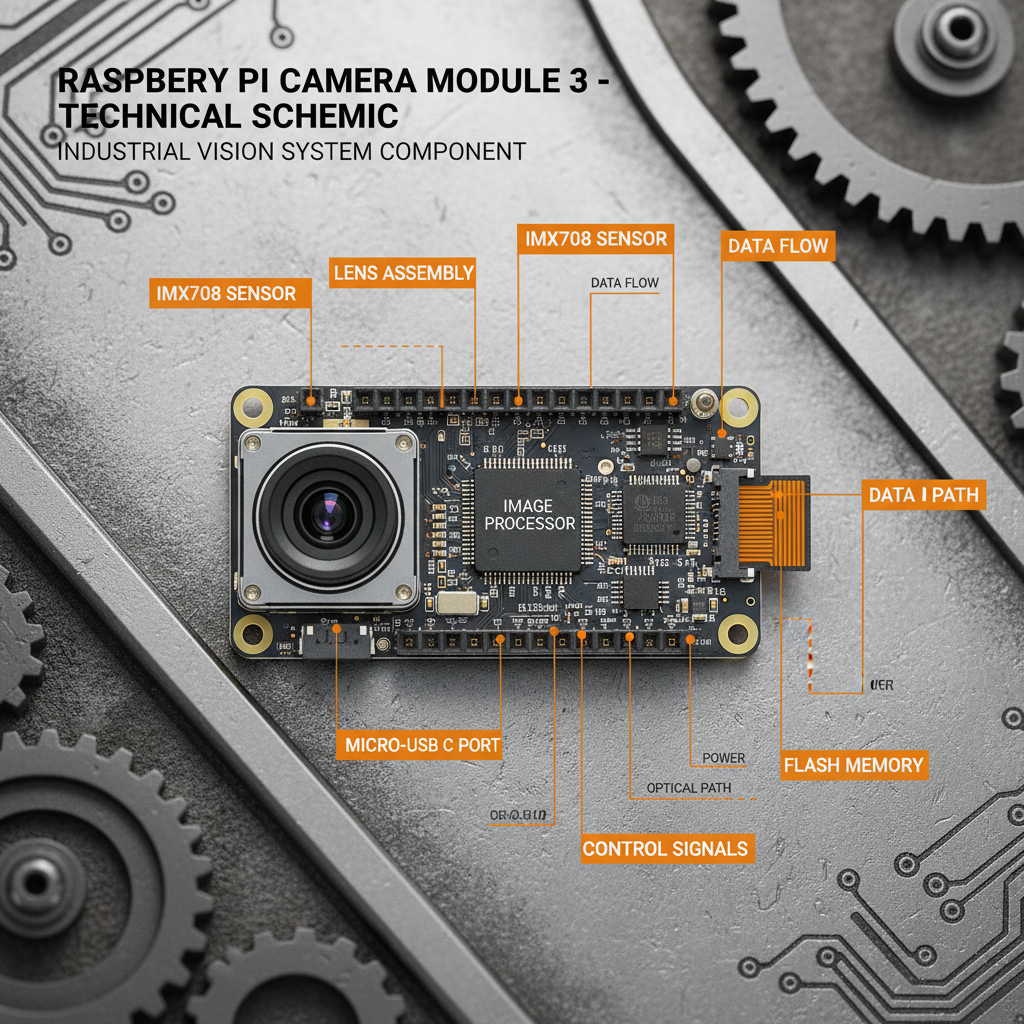

When evaluating a 5 mp camera price, procurement officers and engineers must look beyond the initial sticker cost to understand the total value delivered by the imaging system. In the professional electronics and photography equipment manufacturing sector, a 5MP resolution represents a critical balance between high-definition clarity and data processing efficiency, making it a standard for diverse industrial and commercial applications.
The primary challenge for buyers is distinguishing between low-cost consumer-grade modules and professional OEM/ODM solutions that offer long-term stability, precise focal control, and compatibility with standard protocols like UVC. Selecting a camera based solely on price often leads to hidden costs in software integration, poor low-light performance, or hardware failure in demanding environments.
This analysis provides a comprehensive framework for understanding the factors that drive the pricing of 5MP camera modules, comparing different technical configurations, and establishing a decision matrix to ensure the selected hardware meets specific operational requirements without overspending on unnecessary features.

Core Drivers of 5MP Camera Pricing

The pricing of 5MP camera modules is primarily driven by the quality of the CMOS sensor and the precision of the optical lens assembly. A high-performance 5MP sensor, such as those utilized in professional USB modules, must maintain a high dynamic range (often around 85dB) to ensure image quality across varying lighting conditions, which increases the base component cost compared to generic sensors.
Furthermore, the manufacturing process significantly influences the final price. Companies like Shenzhen Minyou Digital Technology Co., Ltd utilize dust-free anti-static workshops to ensure the purity of the assembly, reducing defect rates and increasing the reliability of the module. This infrastructure investment ensures that the final product meets international standards like CE, FCC, and CCC, adding a layer of quality assurance that justifies a professional price point.
Technical Specifications Impacting Cost
Detailed specifications directly correlate with the market price of a 5MP module. For instance, the choice of interface—USB 2.0 versus USB 3.0—changes the data throughput capabilities. A USB 3.0 Type-C connector allows for faster frame rates and higher resolution streams (up to 25921944@30fps) without compression artifacts, which typically commands a premium over older USB 2.0 interfaces.
Lens construction is another critical variable. A lens with a wide Field of View (FOV), such as a 102° diagonal perspective, requires more sophisticated optical elements to minimize TV distortion. The use of specific lens types, like the MY-7048 with an F/NO 2.5 aperture and IR filter, ensures that the camera can perform in professional environments, contributing to the overall pricing structure based on optical performance.
Comparing Fixed Focus vs. Auto Focus Modules
When analyzing the 5 mp camera price, the focusing mechanism is a primary differentiator. Fixed-focus webcams are generally more cost-effective and are ideal for scenarios where the subject remains at a consistent distance, such as video conferencing or fixed-point monitoring. Their simplicity reduces mechanical failure points and simplifies the installation process.
In contrast, Auto Focus (AF) modules integrate a motorized lens element that allows the camera to maintain sharpness on objects at varying distances. While this increases the hardware cost and complexity, it is essential for applications like document scanning or detailed industrial inspection. Buyers must decide if the versatility of AF justifies the higher investment relative to the application's actual needs.
Relative Value Index by Application
The perceived value of a 5MP camera varies significantly depending on the implementation environment. For simple PC peripheral use, the priority is plug-and-play compatibility. However, for AI-driven facial recognition or intelligent audio-visual software, the value shifts toward sensor stability and the ability to handle high-resolution data streams consistently.
The chart above illustrates a conceptual value-to-cost index across different use cases. While basic video conferencing offers a balanced ROI, specialized industrial AI applications derive much higher value from the high-resolution capabilities of 5MP sensors, justifying the procurement of higher-end, customized OEM modules.
Evaluating Total Cost of Ownership (TCO)
The initial 5 mp camera price is only one component of the Total Cost of Ownership. TCO includes the costs of integration, software driver development, and long-term maintenance. Modules that follow the standard UVC protocol are significantly cheaper to implement because they are compatible with Windows, Linux, and Mac OS without requiring custom proprietary drivers.
Maintenance costs are also influenced by the build quality. A module rated for an operation temperature range of -20℃ to +70℃ is far more valuable in industrial settings than a consumer-grade camera that fails at 40℃. Investing in a more durable, professionally manufactured module reduces the frequency of replacements and system downtime, lowering the long-term TCO.
Common Procurement Pitfalls and Risks
A common mistake in purchasing 5MP modules is focusing on the "megapixel" count without verifying the effective pixel size. Larger pixels (e.g., 2.20μm x 2.20μm) generally provide better light sensitivity and lower noise. Choosing a cheap module with small pixels often results in grainy images, effectively negating the benefit of the 5MP resolution.
Another risk involves ignoring the frame rate at full resolution. Some low-cost cameras claim 5MP resolution but can only achieve 30fps at a reduced resolution, dropping significantly when set to 25921944. For applications requiring fluid motion, such as live broadcasts or AI tracking, verifying the actual frame rate at the target resolution is critical to avoid purchasing an inadequate product.
5MP Module Selection Decision Matrix
To optimize the procurement process, buyers should use a structured matrix that aligns technical capabilities with business objectives. The following table compares different 5MP configuration approaches to help determine which solution provides the best ROI for specific use cases.
| Configuration | Primary Strength | Best Use Case | Cost Impact |
|---|---|---|---|
| Standard USB 2.0 Fixed | Ease of deployment | General Webcams | Low |
| USB 3.0 High-Speed | High frame rate | Live Streaming | Medium |
| Custom OEM 5MP AF | Focus flexibility | Industrial Inspection | High |
| Dual Lens (5MP+2MP) | Depth perception | Face Recognition | High |
| Wide Dynamic Range | Contrast handling | Outdoor Monitoring | Medium-High |
| UVC Compliant Module | Cross-platform use | Embedded Systems | Low-Medium |
By utilizing this matrix, engineers can avoid "over-speccing" the hardware, ensuring that the 5 mp camera price paid aligns precisely with the operational requirements of the end product.
Frequently Asked Questions
The most significant factors include the CMOS sensor quality, lens precision (FOV and aperture), the interface type (USB 2.0 vs 3.0), and the focusing mechanism (Fixed vs Auto Focus). Professional certifications and dust-free manufacturing also add value.
Not necessarily. While 5MP offers higher resolution, if the sensor size is too small, it may have worse low-light performance than a high-quality 2MP sensor. The choice depends on whether you need detail (resolution) or light sensitivity.
UVC (USB Video Class) protocol ensures the camera is "Plug and Play." It eliminates the need for custom drivers on Windows, Mac, and Linux, significantly reducing the software integration cost and time-to-market.
Higher frame rates at full resolution require faster data processing and higher bandwidth interfaces (like USB 3.0). These components are more expensive than those used in cameras that only support high frame rates at lower resolutions.
Check the Field of View (FOV), Aperture (F-number), and the presence of an IR filter. A wide FOV (e.g., 102°) is good for room monitoring, while a smaller FOV is better for focused object inspection.
Yes, professional OEM/ODM manufacturers can customize lenses, sensors, and interfaces. This includes adjusting the focal length, adding specialized filters, or modifying the connector type to fit specific hardware housing.
Conclusion
Determining the right 5 mp camera price requires a strategic shift from looking at unit cost to evaluating technical performance and long-term reliability. By analyzing critical factors such as CMOS sensor quality, UVC compatibility, and optical precision, buyers can avoid the pitfalls of under-specced hardware and ensure their imaging system supports their operational goals efficiently.
For organizations seeking professional-grade imaging solutions, reviewing detailed technical specifications and consulting with an experienced manufacturer is the most effective path to optimizing ROI. You can explore a wide range of high-performance modules and customization options at www.szmyccm.com to find the specific configuration that fits your application.