engaged in camera related products' R&D, design and production



In the competitive landscape of embedded vision, procurement teams are increasingly scrutinizing the balance between sensor performance and total bill of materials cost, often searching for the most optimized ov5640 price to maintain product margins. As image sensors migrate toward higher resolutions and lower power consumption, the industry is seeing a shift in how legacy 2MP sensors are valued against newer alternatives.
The challenge for engineers lies in navigating the volatility of component pricing while ensuring that the chosen module meets specific operational requirements, such as low-light sensitivity and interface compatibility. For automotive DVRs and sports cameras, a slight variance in sensor cost can significantly impact the final retail price of the consumer device.
This analysis explores the economic and technical drivers behind image sensor pricing, evaluating the trade-offs between raw specifications and market availability. We will examine how integrated solutions, like the 2MP MIPI camera modules, provide a scalable alternative for developers seeking stability in their supply chain.


The valuation of an image sensor is not merely based on resolution but on the complexity of the on-chip processing. Factors such as the integration of a 10-bit ADC and the efficiency of the Image Signal Processor (ISP) directly influence the manufacturing cost and the subsequent ov5640 price levels.
When sensors incorporate advanced features like high dynamic range (HDR) or specialized low-power modes, the cost structure shifts. For high-volume production, the ability to extend battery life through efficient power management becomes a primary value driver for developers.
A 1920 x 1080 pixel array serves as the industry baseline for "Full HD" imaging. From an engineering perspective, this resolution provides a critical balance between data throughput and image clarity. Excessively higher resolutions often introduce noise and increase the computational load on the host processor, which can lead to thermal throttling in compact devices.
The integration of a 10-bit ADC ensures that the sensor can capture a wider range of luminance levels, reducing clipping in high-contrast scenes. This is particularly vital for car DVRs where headlights and dark roads coexist in the same frame. The technical precision of the ADC helps in maintaining image integrity before the data reaches the ISP.
Furthermore, the physical footprint of the sensor module dictates the lens selection and the overall optical path. A standardized 2MP module allows engineers to use off-the-shelf lenses, reducing R&D costs and shortening the time-to-market for new hardware iterations.
The choice between MIPI (Mobile Industry Processor Interface) and DVP (Digital Video Port) is a fundamental architectural decision. DVP is often preferred in simpler microcontroller environments due to its straightforward parallel interface, although it consumes more PCB space and is prone to electromagnetic interference (EMI).
The inclusion of RAW10 and RAW8 data formats further enables developers to choose between maximum image quality and reduced bandwidth. This flexibility allows the same sensor hardware to be used across different product tiers, optimizing the cost-per-unit across a diverse product portfolio.
When evaluating the cost-to-performance ratio, engineers often look at normalized scores across several key metrics. While the ov5640 price is a key factor, the real value is found in how the sensor performs under constrained power budgets and varying light conditions.
The following assessment compares generic 2MP configurations based on engineering ratings for power efficiency, integration ease, and image stability.
In sports cameras and wearable devices, the priority is often the reduction of current draw to extend battery life. The use of low-power image signal processors allows these devices to maintain a high frame rate without overheating the chassis, ensuring that the hardware remains reliable during prolonged outdoor use.
For automotive applications, such as car DVRs, the integration of an IR-cut filter is essential to manage infrared light during the day and ensure clear imagery at night. These typical deployment scenarios require a sensor that can handle rapid changes in lighting, making the image processing capabilities of a 2MP module a critical selection criterion.
The industry is moving toward "intelligent" sensing, where a portion of the image processing is handled on the sensor itself to reduce the amount of data sent to the host CPU. This trend, known as edge-sensing, will likely lead to a new pricing tier for sensors that include basic motion detection or region-of-interest (ROI) cropping.
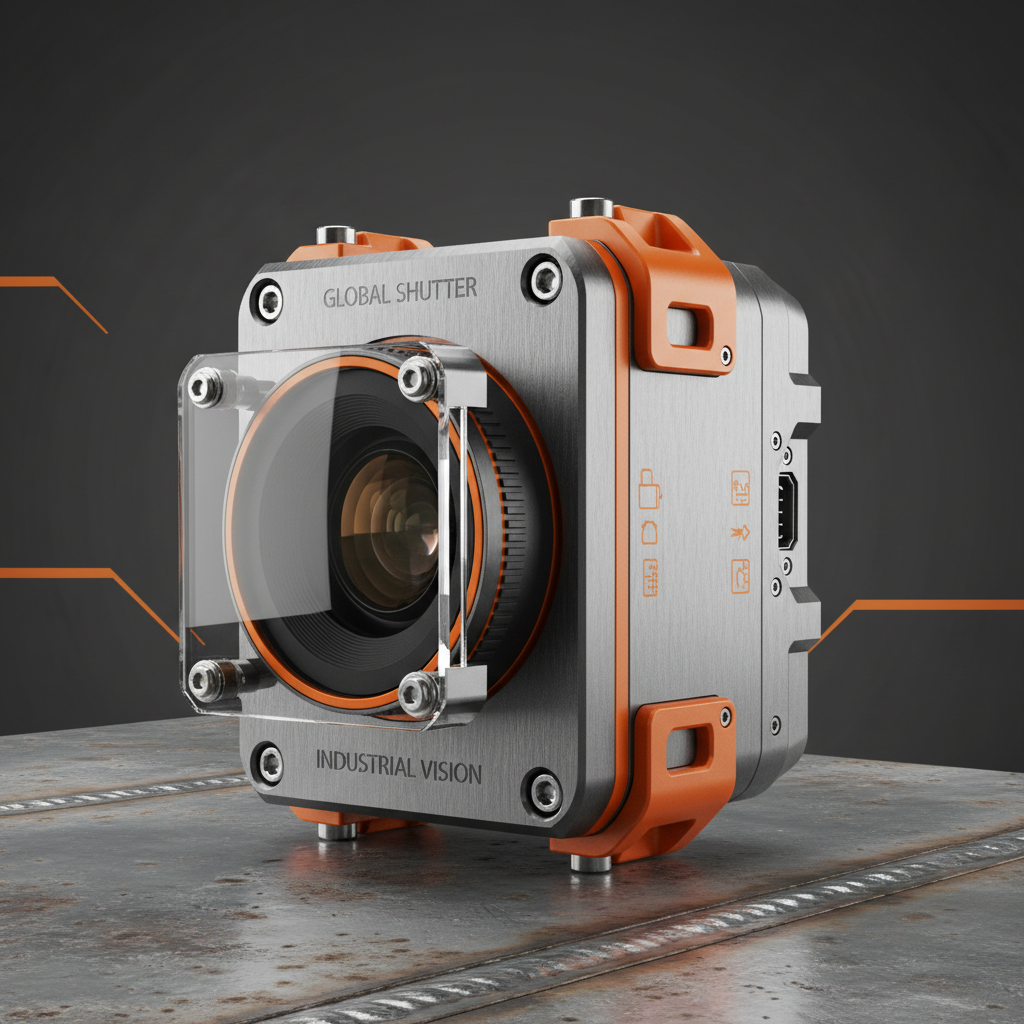
We also anticipate a stronger push toward Global Shutter technology in the 2MP range to eliminate the "jello effect" in high-speed capturing. While rolling shutters are cost-effective, the engineering requirement for precision in industrial automation will drive the adoption of more expensive global exposure modules.
Ultimately, the market will likely bifurcate into ultra-low-cost legacy modules for simple monitoring and high-performance, AI-ready modules for autonomous systems. Procurement strategies will need to shift from simple price-per-unit to a total-system-value approach.
When selecting a camera module, buyers must weigh the initial component cost against the integration effort. A cheaper sensor that requires extensive external circuitry or complex driver development can end up being more expensive in the long run than a pre-integrated module.
The following matrix provides a framework for comparing different configuration profiles based on typical industry requirements. This helps in determining whether a standard 2MP solution is sufficient or if a specialized configuration is necessary.
By aligning the technical profile with the specific application, companies can optimize their BOM without sacrificing the user experience of the final product.
| Configuration Profile | Interface Type | Power Consumption | Primary Use Case |
|---|---|---|---|
| Basic Configuration | DVP | Medium | Simple IoT Monitoring |
| Standard Configuration | MIPI | Low | Consumer Electronics |
| High-Duty Configuration | MIPI + IR Cut | Medium | Automotive DVR |
| Precision Configuration | MIPI RAW10 | Medium | Industrial Inspection |
| Automated Configuration | MIPI / I2C | Low | AI Smart Cameras |
| Industry Baseline | Mixed | Variable | General Purpose OEM |
The 10-bit ADC (Analog-to-Digital Converter) allows the sensor to represent 1,024 distinct levels of brightness per pixel, compared to 256 levels in an 8-bit system. This increased precision reduces contouring in gradients (like a sunset) and provides more headroom for post-processing, which is critical for achieving a professional look in automotive and sports footage.
RAW8 uses 8 bits per pixel, resulting in a smaller data stream that is easier for lower-end processors to handle. RAW10 increases the data volume by 25%, providing better color depth and reduced noise. In high-speed applications, switching to RAW8 can reduce the MIPI bus load, preventing frame drops and reducing system power consumption.
AI applications require high-resolution data at high frame rates to perform real-time inference. MIPI's differential signaling allows for much higher clock speeds with lower EMI, meaning the AI processor receives a clean, high-speed data stream. DVP's parallel nature would require too many pins and would be too slow for complex AI vision tasks.
To optimize power, you should utilize the sensor's low-power modes and optimize the frame rate. Using a MIPI interface instead of DVP also reduces current draw. Additionally, configuring the sensor to output RAW8 instead of RAW10 can decrease the processing load on the host CPU, further extending the battery life of the application.
The primary challenges are thermal management and light fluctuation. DVRs are often exposed to direct sunlight, which can heat the sensor and increase noise. Using a module with a robust thermal design and an IR-cut filter is essential to ensure the image remains clear and doesn't wash out during the day or become too dark at night.
Do not focus solely on the unit price. Evaluate the "Total Cost of Ownership" by including the cost of the PCB layout (MIPI requires fewer layers than DVP), the development time for drivers, and the cost of external components like IR filters. A slightly higher unit price for a pre-integrated module often results in lower overall project costs.
The optimization of the ov5640 price and the selection of 2MP imaging hardware are fundamentally about balancing resolution, power efficiency, and interface stability. As we have seen, the shift toward MIPI interfaces and integrated ISPs is not just a trend but a necessity for modern, battery-dependent, and AI-driven devices.
For developers and procurement managers, the practical implication is clear: prioritize modules that offer a combination of high-speed interfaces and low power consumption. By focusing on these technical markers rather than just the initial price point, companies can ensure their products remain competitive in an increasingly demanding visual ecosystem.