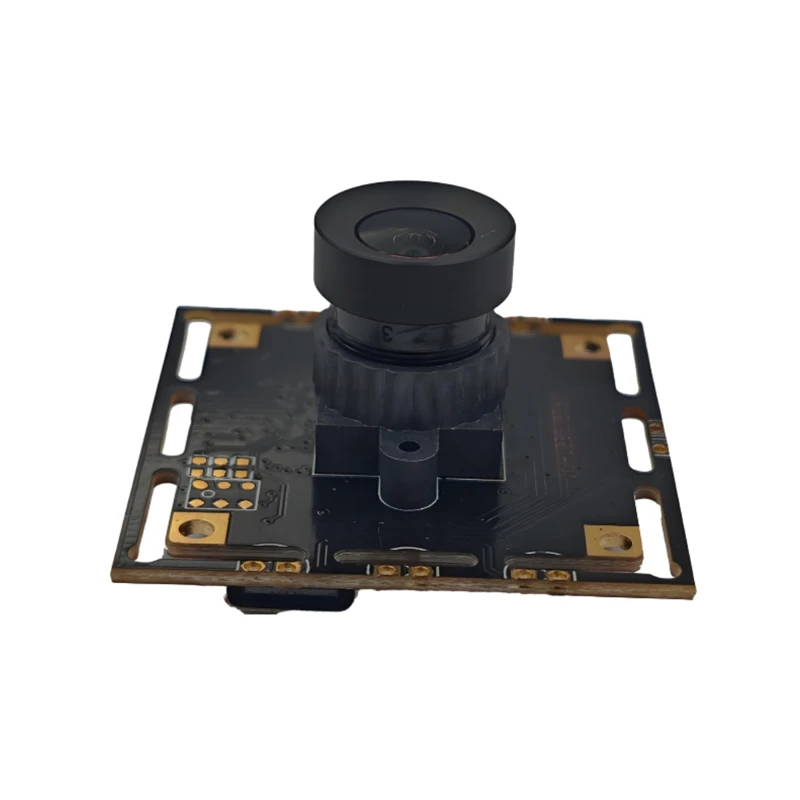
engaged in camera related products' R&D, design and production

Advanced usb 3.0 camera module Solutions for Indonesia Industrial Automation

High-performance imaging systems engineered for the humid tropical climates and rapid digital transformation of Southeast Asia's largest economy.

The Current State of Imaging Technology in Indonesia

Analyzing the demand for robust camera module hardware in the Indonesian archipelago.

Indonesia's industrial landscape is currently undergoing a massive "Making Indonesia 4.0" transition. In the manufacturing hubs of West Java and East Java, there is a surging demand for high-speed data transmission, making the module camera usb standard a critical component for real-time quality control in textile and automotive plants.

Due to the region's high humidity and tropical temperature fluctuations, standard electronics often fail. Local industries are shifting toward ruggedized imaging components that offer superior thermal management and moisture resistance, ensuring that high-resolution captures remain stable in non-climate-controlled factory floors.

Furthermore, the rise of smart city initiatives in Jakarta and Nusantara is driving the adoption of embedded vision. The need for compact, low-power fpc camera module designs has increased, allowing for the seamless integration of surveillance and traffic monitoring sensors into tight urban infrastructure.
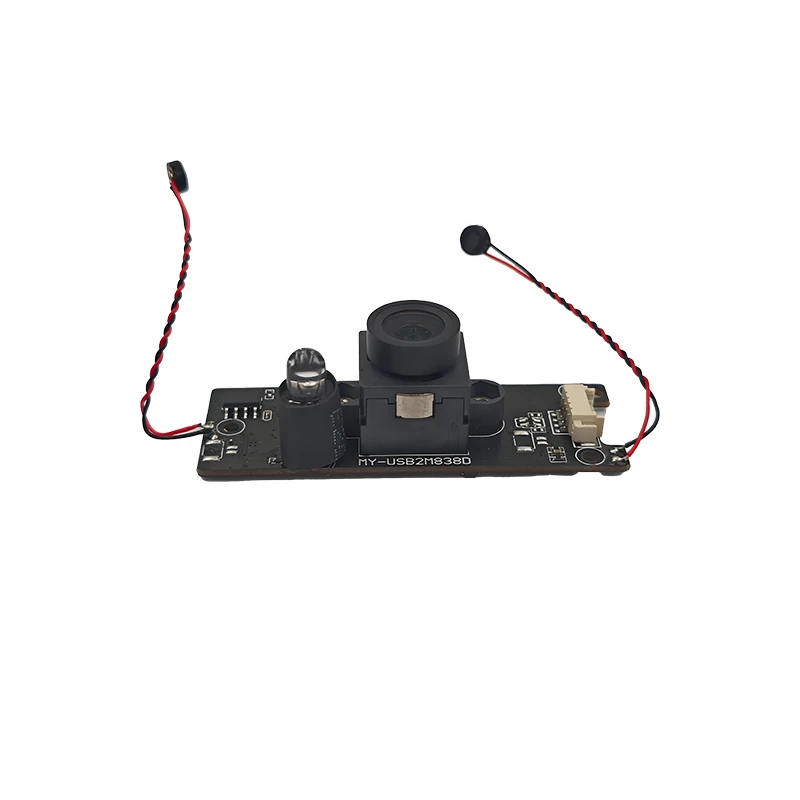
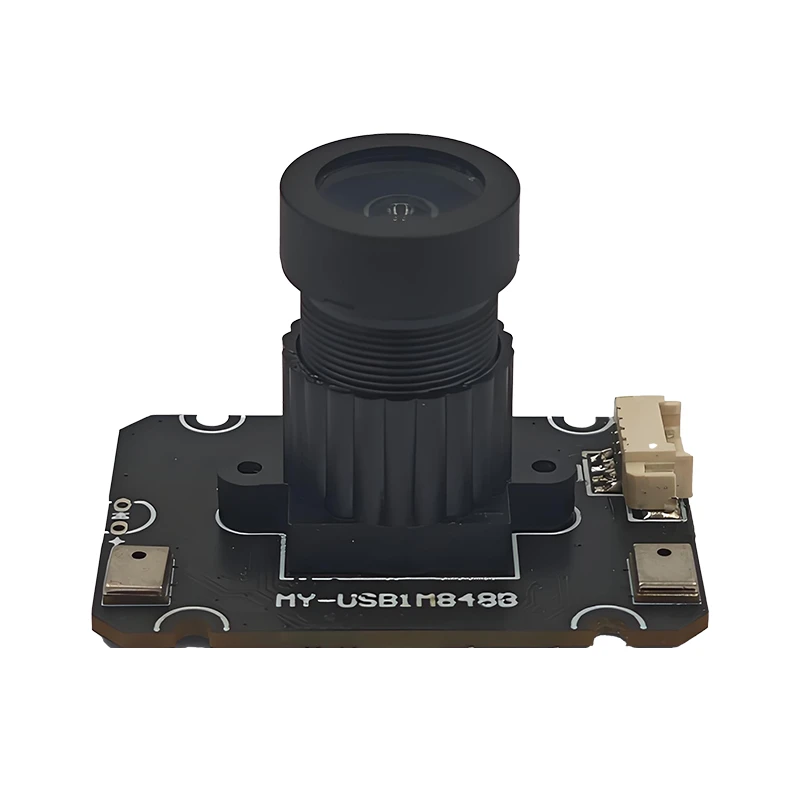
Evolution and Trajectory of Vision Systems

From basic analog sensors to high-bandwidth USB 3.0 digital imaging.

Market Development History

Between 2010 and 2015, the Indonesian market relied heavily on analog CCTV and low-resolution VGA modules. These systems were sufficient for basic monitoring but lacked the data throughput required for automated inspection, creating a bottleneck in production efficiency.

From 2016 to 2020, the transition to USB 2.0 became widespread. This era saw the introduction of the first widespread module camera usb interfaces in local medical devices and basic kiosks, though frame rates remained a limitation for high-speed assembly lines.

Since 2021, the adoption of the usb 3.0 camera module has revolutionized the sector. The jump to 5Gbps bandwidth allowed for the deployment of 12mp usb camera module sensors, enabling precise defect detection in Indonesia's growing electronics assembly sector.

Future Development Trends

Edge AI Integration

We predict a shift toward "Smart Modules" where AI processing occurs on the camera board, reducing the latency for Indonesian logistics hubs.

Extreme Miniaturization

The next 3 years will see a dominant trend in ultra-thin fpc camera module designs to support the wearable health-tech market in Southeast Asia.

Hyperspectral Imaging

Driven by Google search trends in agricultural tech, we expect high-resolution modules to integrate multispectral sensors for palm oil plantation monitoring.

Future Outlook for Imaging Hardware

Strategic foresight for the software and electronic equipment manufacturing industry.

Ultra-High Bandwidth
Rapid migration toward USB 3.2 and beyond to support 4K raw streams for Indonesian industrial labs.
Low-Light Optimization
Development of BSI sensors to improve visibility in dimly lit Indonesian warehouse environments.
Modular Integration
Standardized FPC interfaces to allow rapid replacement and upgrading of sensors in IoT devices.
AI-Ready Hardware
Hardware acceleration for on-board image processing to support Indonesia's smart-city vision.

Industry Outlook

Over the next 3-5 years, the synergy between high-resolution imaging and 5G deployment in Indonesia will catalyze a boom in remote inspection. The ability to stream high-fidelity data via usb 3.0 camera module units to centralized clouds will reduce operational costs for mining and oil enterprises in Kalimantan.

Based on current search trends, there is a significant uptick in "automated optical inspection" (AOI) queries within the region. This indicates a transition from manual quality checks to software-driven, hardware-integrated solutions, cementing the role of the camera module as the eyes of the industrial revolution.

Localized Application Scenarios in Indonesia

Practical deployments of advanced imaging modules across various Indonesian sectors.

1. Palm Oil Quality Automation

Implementing high-resolution 12mp usb camera module units on conveyor belts to automatically detect ripeness and defects in palm oil fruits using AI-based color analysis.

2. Jakarta Smart Traffic Monitoring

Integrating compact fpc camera module sensors into urban lighting poles for real-time vehicle counting and license plate recognition to alleviate city congestion.

3. Textile Defect Detection in West Java

Using high-speed usb 3.0 camera module systems to scan fabrics for weave errors at speeds exceeding 2 meters per second, ensuring export-grade quality.

4. Medical Diagnostics in Remote Clinics

Deploying portable module camera usb devices for dermatology and ENT screenings in rural Indonesian islands, transmitting high-def images to specialists in Jakarta.

5. E-commerce Sorting Hubs

Applying specialized camera module arrays for automatic barcode scanning and package dimensioning to speed up the booming logistics sector in the archipelago.

Brand Story

Global Development Journey of Shenzhen Minyou Digital Technology Co., Ltd.

Foundational Excellence

Established with a vision to bridge the gap between complex sensor technology and commercial accessibility, focusing on high-precision optical engineering.

Technological Breakthroughs

Pioneered the integration of high-megapixel sensors with USB 3.0 interfaces, solving the data bottleneck for industrial imaging clients.

Global Market Expansion

Expanded operations into Southeast Asia, specializing in tailoring hardware for the specific environmental challenges of regions like Indonesia.

Quality Certification

Achieved international standards in electronic manufacturing, ensuring every module meets rigorous industrial-grade stability and longevity tests.

Vision for the Future

Committed to driving the "Vision 4.0" movement by providing the most reliable and scalable imaging components for the global AI revolution.

Frequently Asked Questions in the Indonesia Market

Technical guidance and support for local system integrators.

How does a usb 3.0 camera module handle high-humidity environments in Indonesia?

Our modules are available with conformal coating options that protect the circuitry from moisture and oxidation, essential for the tropical climate of the archipelago.

What are the advantages of a 12mp usb camera module for AOI systems?

The higher pixel density allows for the detection of microscopic defects without needing to move the camera closer to the object, increasing throughput and safety.

Can a fpc camera module be integrated into custom Indonesian IoT hardware?

Yes, our FPC designs are highly flexible and can be customized in terms of cable length and connector type to fit your specific PCB layout.

Is the module camera usb compatible with Windows and Linux systems?

Our modules follow the UVC (USB Video Class) standard, ensuring plug-and-play compatibility with most modern operating systems without needing custom drivers.

What is the maximum cable length for a usb 3.0 camera module before signal loss?

Standard passive cables support up to 3 meters; however, for larger Indonesian factory layouts, we recommend active repeaters to maintain 5Gbps speeds.

How do I choose between a standard camera module and an FPC version?

Choose the USB module for rapid deployment and external mounting, and the FPC version for internal, space-constrained embedded applications.

Consult Our Imaging Experts

Ready to upgrade your industrial vision systems in Indonesia? Our engineers provide full technical support for your integration needs.

Contact Us Now

If you are interested in our products, you can choose to leave your information here, and we will be in touch with you shortly.