The modern world increasingly relies on advanced imaging technology, and at the heart of many of these systems lies the fpc camera module. These modules, distinguished by their flexibility and compact size, are revolutionizing industries from consumer electronics to medical diagnostics. Understanding the intricacies of fpc camera modules is crucial for engineers, product designers, and anyone involved in developing or utilizing imaging solutions. Their impact is far-reaching, influencing everything from smartphone cameras to sophisticated industrial inspection systems.
Globally, the demand for high-quality, miniaturized imaging components continues to surge. According to industry reports, the market for camera modules is projected to reach billions of dollars in the coming years, driven by advancements in artificial intelligence, machine vision, and the Internet of Things (IoT). The fpc camera module plays a pivotal role in enabling these innovations. This rising demand creates both opportunities and challenges for manufacturers, requiring continuous improvement in performance, cost-effectiveness, and reliability.
The challenges associated with traditional camera systems—bulkiness, rigid connections, and susceptibility to interference—are effectively addressed by fpc camera modules. This technology offers a streamlined, robust, and efficient solution, driving innovation across numerous sectors and improving the functionality of countless devices we rely on daily. The ability to seamlessly integrate high-resolution imaging into tight spaces is a key advantage driving adoption.
The Essence of fpc camera module
At its core, the fpc camera module represents a significant advancement in camera technology. Unlike traditional rigid PCB-based cameras, fpc (Flexible Printed Circuit) modules utilize flexible substrates, enabling greater design freedom and mechanical robustness. This flexibility allows for integration into spaces previously inaccessible to conventional cameras, leading to more compact and innovative product designs.
The inherent benefits of fpc technology extend beyond just physical space savings. The flexible interconnects reduce stress on solder joints, improving reliability and extending the lifespan of the module, especially in applications involving vibration or mechanical stress. The fpc camera module’s capacity to adapt to complex geometries makes it a key component in a vast array of applications.
Global Relevance and Industry Context
The demand for fpc camera modules is intrinsically linked to the proliferation of visual technologies across numerous global industries. From smartphones and automotive systems to medical devices and industrial automation, the ability to capture and process images is becoming increasingly critical. This global demand is particularly strong in Asia, with countries like China, South Korea, and Japan leading the way in both manufacturing and adoption.
According to market research, the global camera module market is anticipated to experience steady growth, driven by the increasing integration of cameras into various applications. The automotive sector, for example, is witnessing a significant demand for fpc camera modules for advanced driver-assistance systems (ADAS) and autonomous driving technologies. The medical imaging sector relies heavily on these modules for endoscopes and diagnostic tools, demanding high precision and reliability.
Furthermore, the rise of the Internet of Things (IoT) and the increasing number of connected devices are contributing to the expanding market for fpc camera modules. Smart home security systems, surveillance cameras, and industrial inspection systems all depend on these modules to provide crucial visual data. The consistent demand fuels advancements in design, production, and application of fpc camera technology.
Defining the fpc camera module
Simply put, an fpc camera module is a self-contained imaging unit utilizing a Flexible Printed Circuit (FPC) as its core interconnection substrate. It integrates an image sensor (CMOS or CCD), a lens, and supporting circuitry – including image signal processing (ISP) – all mounted onto a flexible circuit board. This modular design simplifies integration into various devices and systems.
The key differentiating factor is the FPC itself. Traditional circuit boards are rigid, whereas FPC offers flexibility, allowing the module to conform to curved surfaces or tight spaces. This flexibility doesn't compromise performance; modern FPC materials provide excellent signal integrity and mechanical durability. This makes them ideal for applications where space is limited and vibration is a concern.
The fpc camera module isn’t just a component; it’s an integrated solution. It significantly reduces the complexity of camera system design, lowering development costs and accelerating time to market. The module approach allows manufacturers to focus on core product functionalities rather than spending extensive resources on camera system engineering.
Key Components and Characteristics
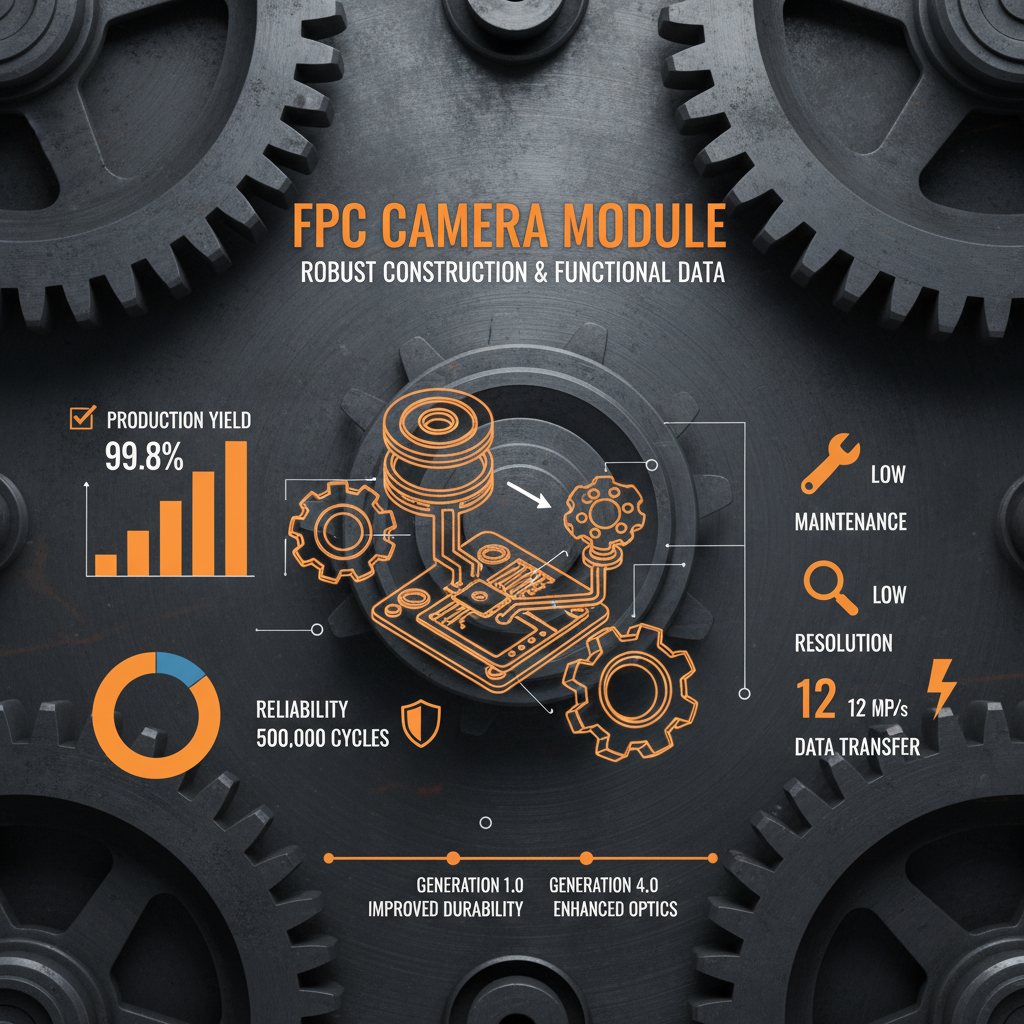
Several critical aspects define the functionality and performance of an fpc camera module. Durability, for example, is enhanced by the flexible circuit design, which provides greater resistance to shock and vibration compared to rigid PCBs. This resilience makes them suitable for harsh environments and demanding applications.
Scalability is another key characteristic. FPC technology allows for the creation of modules in various sizes and configurations, catering to diverse application requirements. Cost-efficiency is achieved through simplified assembly and reduced material waste. Furthermore, the high degree of miniaturization minimizes the overall system footprint, leading to more compact and streamlined product designs.
Performance Metrics of fpc camera module
Applications Across Industries
The versatility of the fpc camera module makes it suitable for a broad range of applications. In the consumer electronics sector, they are ubiquitous in smartphones, laptops, and wearable devices, enabling high-quality video conferencing, image capture, and facial recognition. In post-disaster relief operations, small, robust fpc camera modules integrated into drones are crucial for assessing damage and locating survivors.
The automotive industry leverages these modules for advanced driver-assistance systems (ADAS), rearview cameras, and autonomous driving features. Their compact size and resistance to vibration are particularly valuable in this demanding environment. Moreover, in remote industrial zones, these modules can facilitate real-time monitoring of equipment and infrastructure, enhancing safety and efficiency.
Advantages and Long-Term Value
The tangible benefits of employing fpc camera modules are numerous. Cost savings are realized through reduced assembly time, lower material costs, and increased production efficiency. The modules’ durability and extended lifespan translate to lower maintenance requirements and reduced downtime. From a sustainability standpoint, the compact size and lightweight design contribute to reduced material consumption and lower transportation costs.
Beyond the practical advantages, fpc camera modules enhance user experiences and build trust. The increased image quality provides a more immersive and engaging experience for consumers. Their reliability inspires confidence in product performance. By enabling innovative applications, these modules drive progress and enhance the quality of life for people worldwide.
Future Trends and Innovations
The future of fpc camera modules is closely tied to emerging technologies like artificial intelligence (AI) and machine vision. We can anticipate the integration of more sophisticated image processing capabilities directly into the module, enabling real-time object recognition, scene understanding, and enhanced image quality. Advancements in materials science will lead to even more flexible and durable FPC substrates, opening up new possibilities for miniaturization and integration.
The development of environmentally friendly materials and manufacturing processes is also a key trend. Companies are increasingly focused on reducing their carbon footprint and adopting sustainable practices. Furthermore, the convergence of fpc camera modules with other sensor technologies, such as LiDAR and radar, will create more comprehensive sensing solutions for autonomous systems and smart environments.
Digital transformation and automation play a pivotal role in this progression, enhancing the efficiency and precision of fpc camera module production. These integrated advancements will not only enhance performance, but also lead to more cost-effective and ecologically sustainable solutions.
FAQS
FPC camera modules offer significant advantages, including increased flexibility for design integration, enhanced durability due to the flexible circuit, reduced size and weight, and improved signal transmission. The flexible interconnects reduce stress on solder joints, resulting in higher reliability, especially in applications involving vibration or mechanical stress. These advantages lead to more innovative and robust imaging solutions.
Several industries are experiencing significant benefits. The consumer electronics sector (smartphones, laptops) relies heavily on these modules. Automotive utilizes them for ADAS and rearview cameras. Medical devices, particularly endoscopes, benefit from their small size and flexibility. Industrial automation leverages them for machine vision and quality control. Furthermore, drone technology and security systems are also key beneficiaries.
Contrary to intuition, the flexibility of the FPC actually improves reliability. The flexible circuit absorbs stress and vibration, reducing strain on solder joints and other critical components. This makes fpc camera modules more resistant to damage from mechanical shock and environmental factors, resulting in a longer lifespan and reduced failure rates compared to rigid PCB-based cameras.
Yes, fpc camera modules are highly customizable. Manufacturers can adjust parameters such as image sensor resolution, lens type, module size, and connector type to tailor the module to specific needs. Customization extends to image signal processing (ISP) algorithms and even the FPC substrate material, providing a flexible solution for diverse applications. We at szmyccm specialize in custom fpc camera module solutions.
Lead times for custom fpc camera modules vary depending on the complexity of the design, the volume of the order, and current manufacturing capacity. Typically, lead times range from 4 to 12 weeks for prototype development and 8 to 16 weeks for mass production. We prioritize clear communication and work closely with clients to manage expectations and deliver products on time.
Rigorous quality control measures are implemented throughout the entire manufacturing process. This includes incoming material inspection, in-process quality checks, and final product testing. We utilize advanced testing equipment to verify image quality, electrical performance, and mechanical durability. We adhere to industry standards and maintain a robust quality management system.
Conclusion
In conclusion, the fpc camera module represents a significant advancement in imaging technology, offering unparalleled flexibility, reliability, and performance. Its impact spans across a diverse range of industries, driving innovation and enhancing user experiences. From consumer electronics to automotive, medical devices, and industrial automation, these modules are at the heart of many cutting-edge applications. Understanding their key characteristics and advantages is crucial for engineers, product designers, and anyone involved in developing or utilizing imaging solutions.
Looking ahead, the future of fpc camera modules is bright, with ongoing advancements in materials science, AI integration, and sustainable manufacturing practices. These innovations will further enhance their capabilities and broaden their applications, shaping the next generation of imaging technologies. For high-quality, customized fpc camera modules, visit our website today: www.szmyccm.com