In the rapidly evolving landscape of machine vision and digital imaging, the usb3 camera module has emerged as a cornerstone for high-bandwidth data transmission. As industries shift toward higher resolutions and faster frame rates, the transition from USB 2.0 to USB 3.0 is no longer just an upgrade—it is a necessity for maintaining real-time precision in critical applications.
Integrating a high-performance usb3 camera module allows developers to bypass the bottlenecks associated with slower data buses, enabling the seamless flow of 4K imagery and high-speed video streams. This technological leap is instrumental in bridging the gap between raw optical capture and actionable digital intelligence, providing the backbone for everything from industrial automation to advanced medical diagnostics.
Understanding the intricacies of these modules—ranging from their throughput capabilities to their integration flexibility—is essential for any organization aiming to optimize its visual sensing pipeline. By leveraging the superior speed and power delivery of the USB 3.0 standard, businesses can achieve unprecedented levels of clarity and responsiveness in their imaging systems.
Global Industry Context of USB3 Camera Modules
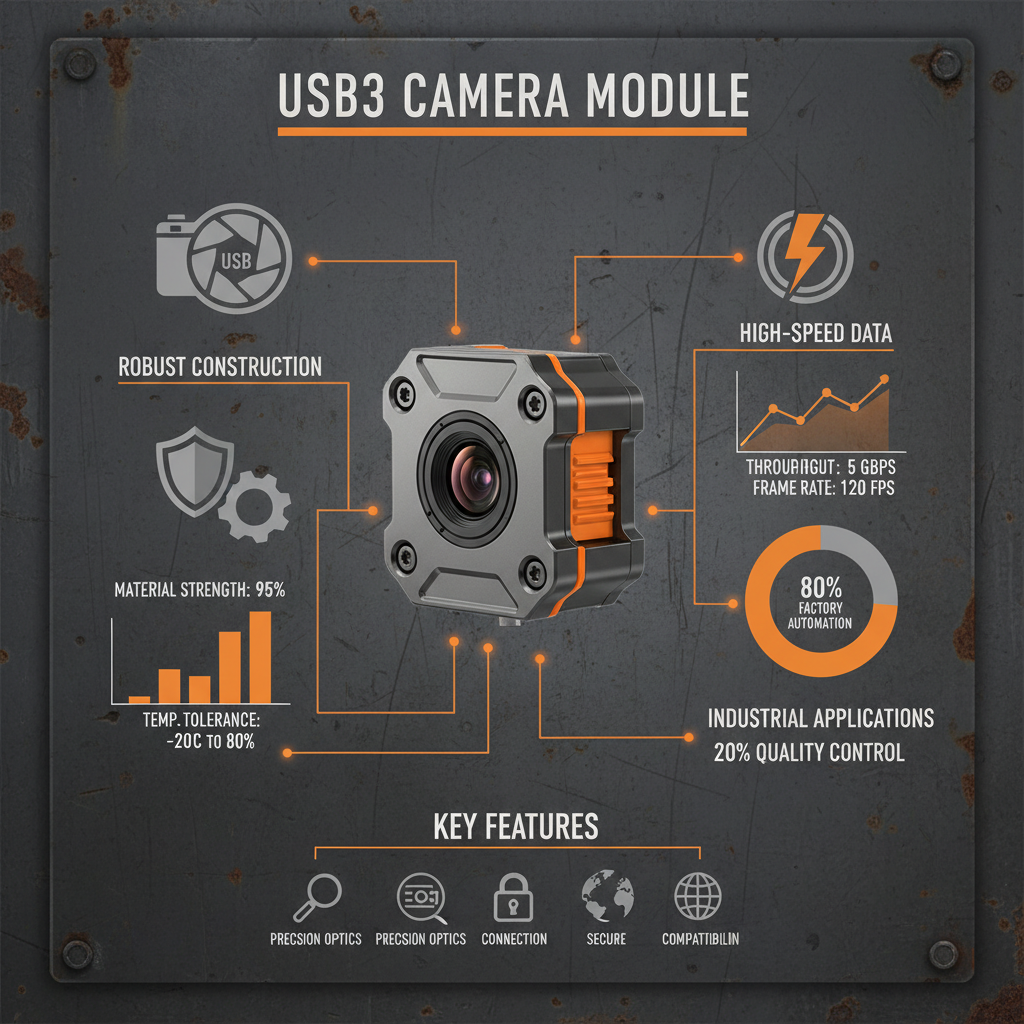
On a global scale, the demand for high-speed visual data acquisition has surged, driven by the Fourth Industrial Revolution (Industry 4.0). According to international standards and market trends aligned with ISO quality benchmarks, the shift toward automation requires sensors that can process gigabytes of data per second without latency. The usb3 camera module addresses this by offering a theoretical transfer rate of up to 5Gbps, which is ten times faster than its predecessor.
This leap in bandwidth is critical for solving the "data choke" problem found in high-resolution 4K and 8MP systems. In regions like East Asia and North America, where robotic precision is paramount, the implementation of these modules has reduced inspection times in manufacturing by nearly 40%, proving that high-speed connectivity is the primary catalyst for operational efficiency.
Defining the USB3 Camera Module and Its Role
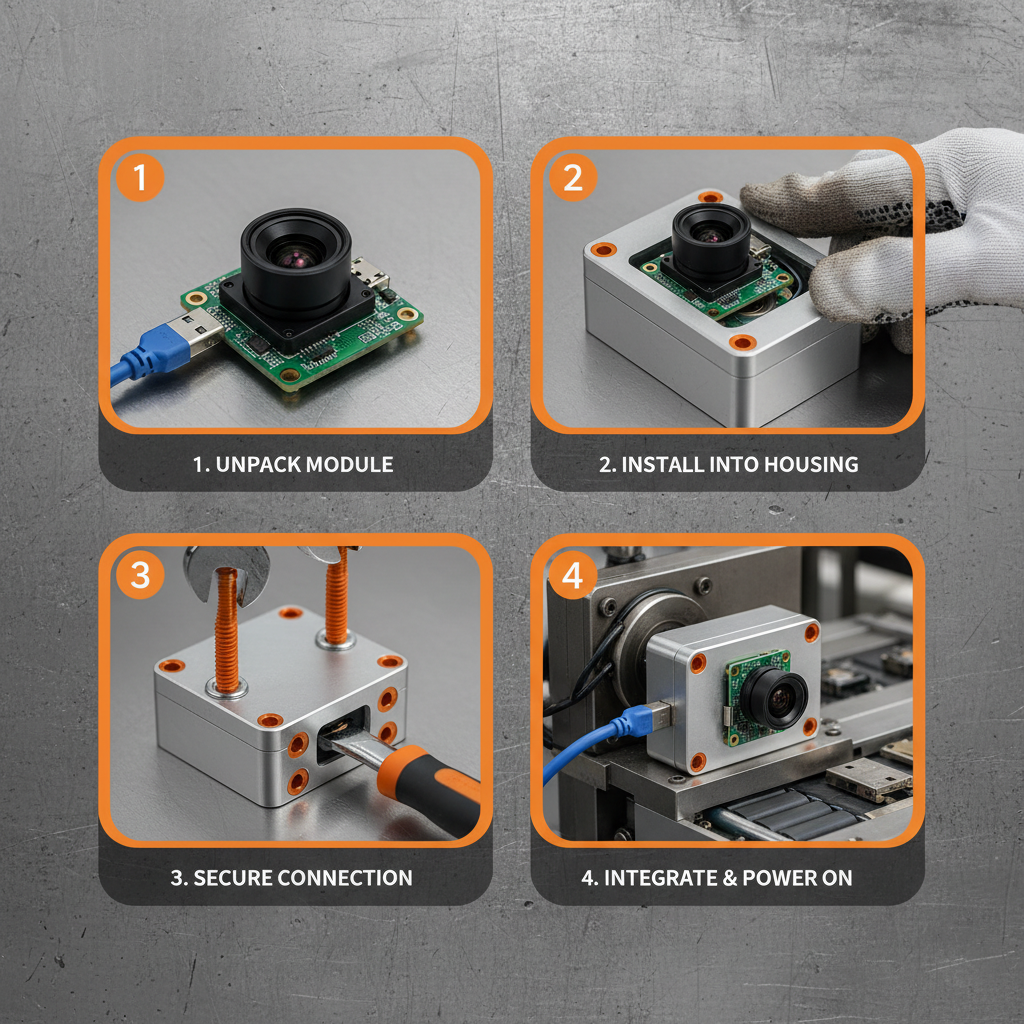
In simple terms, a usb3 camera module is a compact imaging assembly that combines a high-resolution CMOS sensor with a USB 3.0 interface controller. Unlike standard webcams, these modules are designed for integration into larger systems, providing the raw hardware capability to capture high-frame-rate video and transmit it to a host computer with minimal compression and maximum fidelity.
Its role extends far beyond simple photography; it is a vital tool for humanitarian and scientific needs. For instance, in telemedicine, these modules enable the transmission of high-definition surgical feeds in real-time, allowing specialists to provide remote guidance with absolute visual clarity, effectively removing geographical barriers to critical healthcare.
Furthermore, the module's ability to provide higher power delivery via the USB 3.0 bus allows for the integration of advanced features like autofocus (AF) and active illumination without requiring external power sources. This makes the usb3 camera module an ideal choice for portable, high-performance diagnostic devices.
Core Components for High-Speed Imaging
The effectiveness of a usb3 camera module depends heavily on its sensor-to-interface synergy. The CMOS sensor must be capable of high-speed readout to match the 5Gbps throughput of the USB 3.0 bus, ensuring that there is no bottleneck between the capture of a photon and the storage of a pixel.
Scalability is another core factor. By utilizing a modular design, the usb3 camera module can be adapted with various lenses—from wide-angle for surveillance to macro lenses for industrial inspection—allowing a single interface standard to serve wildly different optical requirements.
Finally, thermal management and signal integrity are paramount. Because high-speed data transmission generates more heat, premium usb3 camera module designs incorporate advanced PCB layouts and heat dissipation materials to prevent thermal throttling, ensuring consistent performance during 24/7 industrial operation.
Practical Performance Metrics and Scalability
When evaluating the performance of a usb3 camera module, the most critical metrics are frames per second (FPS) at maximum resolution and the latency of the data packet delivery. High-end modules can maintain 60FPS or higher at 1080p, which is essential for capturing fast-moving objects on a conveyor belt or monitoring high-speed mechanical failures.
Beyond speed, the cost-efficiency of these modules provides a scalable path for companies to upgrade their fleets. Instead of replacing entire imaging systems, integrating a USB 3.0 based module allows for "plug-and-play" upgrades that significantly boost data throughput without requiring a complete redesign of the software architecture.
Performance Benchmarks for USB3 Camera Module Variants
Global Applications and Real-World Use Cases
The versatility of the usb3 camera module is evident in its adoption across diverse sectors. In the automotive industry, these modules are integrated into Advanced Driver Assistance Systems (ADAS) for high-speed lane detection and obstacle recognition, where every millisecond of latency can be the difference between safety and a collision.
In remote industrial zones, such as offshore oil rigs or automated warehouses in Europe, these modules are used for structural health monitoring. By streaming high-resolution imagery of turbine blades or conveyor joints via a usb3 camera module, engineers can detect microscopic cracks using AI-driven analysis without needing to be physically present in hazardous environments.
Long-Term Value and Strategic Advantages
Investing in a high-quality usb3 camera module provides immense long-term value through improved reliability and reduced downtime. Because the USB 3.0 standard is universally supported across Windows, Linux, and macOS, companies avoid "vendor lock-in" and can easily migrate their hardware as their software requirements evolve.
From a logical perspective, the increased bandwidth leads to higher data integrity. By reducing the need for heavy lossy compression, the usb3 camera module ensures that the images used for quality control are authentic and detailed, which directly translates to higher product yield and lower waste in manufacturing.
Emotionally, the trust established through precision is invaluable. Whether it is a surgeon relying on a crystal-clear feed or a plant manager trusting an automated safety sensor, the reliability of the usb3 camera module fosters a culture of safety and innovation within the organization.
Future Trends and Innovation in USB3 Imaging
Looking forward, the evolution of the usb3 camera module is closely tied to the rise of Edge AI. We are seeing a trend where the module does not just transmit data, but performs initial processing—such as object detection or noise reduction—directly on the hardware before sending the optimized stream to the host, further reducing bus congestion.
Digital transformation is also pushing these modules toward "Green Imaging." Newer iterations of the usb3 camera module are being designed with ultra-low-power standby modes and more efficient voltage regulators, aligning with global sustainability goals to reduce the carbon footprint of massive data centers and smart factories.
As we move toward USB 3.2 and USB4, the foundation laid by current usb3 camera module technology will allow for an almost seamless transition to even higher speeds, potentially enabling 8K raw video streaming in real-time for industrial applications.
Comparison of USB3 Camera Module Technical Specifications
|
Module Variant
|
Data Throughput
|
Typical Application
|
Reliability Score (1-10)
|
| USB3 1080P AF |
High (Up to 5Gbps) |
Medical Diagnostics |
9.2 |
| USB3 4K 8MP |
Ultra-High |
High-End Inspection |
8.8 |
| USB3 Global Shutter |
Medium-High |
Fast Motion Tracking |
9.7 |
| USB3 Dual Lens |
High (Dual Stream) |
3D Depth Sensing |
8.5 |
| USB3 AI Integrated |
Optimized/Variable |
Smart City Security |
9.0 |
| USB3 FPC Custom |
High |
Embedded Robotics |
8.2 |
FAQS
The primary advantage is the massive increase in bandwidth. While USB 2.0 is capped at 480Mbps, a usb3 camera module supports up to 5Gbps. This allows for the transmission of high-resolution images (like 4K) and higher frame rates without the need for aggressive compression, which preserves image detail and reduces latency in real-time applications.
Yes, they are ideally suited for industrial automation. Their high data throughput allows for real-time quality inspection, robotic guidance, and high-speed sorting. Many industrial-grade usb3 camera modules also feature global shutters to eliminate motion blur, making them perfect for fast-moving assembly lines.
Most usb3 camera modules follow the UVC (USB Video Class) standard, meaning they are plug-and-play on most modern operating systems like Windows and Linux. However, for advanced features like manual gain control, trigger modes, or raw data access, manufacturer-provided SDKs are usually recommended to unlock the full potential of the hardware.
USB 3.0 provides higher power delivery (up to 900mA) compared to USB 2.0 (500mA). This allows the usb3 camera module to power internal components like autofocus motors, infrared LEDs, or onboard DSPs directly from the USB port, eliminating the need for cumbersome external power cables in many installations.
USB 3.0 has a shorter native cable length limit (typically around 3 meters) than USB 2.0 to maintain signal integrity at high speeds. For longer distances, we recommend using active USB 3.0 extension cables or USB-over-Ethernet extenders to ensure the usb3 camera module maintains its full bandwidth without data loss.
The choice depends on your application. For wide-area monitoring, a wide-angle lens is best. For precision measurement or reading barcodes, a macro or narrow-angle lens is preferred. Because most usb3 camera modules use standard M12 or CS mounts, you can easily swap lenses to match your specific focal length and field-of-view requirements.
Conclusion
The usb3 camera module represents a pivotal advancement in imaging technology, combining high-speed data transmission with compact, modular hardware. From its ability to eliminate bandwidth bottlenecks to its versatility in medical, automotive, and industrial sectors, this technology ensures that high-resolution visual data is accessible, reliable, and actionable in real-time.
As we move toward a future defined by Edge AI and autonomous systems, the strategic integration of high-performance imaging modules will be a key differentiator for businesses. We recommend investing in scalable USB 3.0 solutions today to build a future-proof foundation for your digital transformation. Visit our website for more information: www.szmyccm.com