engaged in camera related products' R&D, design and production



Selecting a high-quality visual interface for modern communication often boils down to a critical balance between image clarity and audio fidelity. While many users focus solely on resolution, the integration of a capable microphone determines whether a professional presentation is perceived as polished or amateur.
The shift toward hybrid work environments has transitioned webcams from simple peripherals to essential productivity tools. This evolution has pushed manufacturers to integrate sophisticated AI-driven noise reduction and auto-focus capabilities directly into the hardware, reducing the need for external audio equipment.
For those looking to buy webcam with microphone, understanding the intersection of sensor technology and acoustic pickup is key to making an informed investment.


Early webcams were rudimentary devices providing low-resolution images and poor audio. The industry shifted when the demand for seamless remote collaboration required the convergence of a high-definition sensor and a noise-canceling microphone into a single, compact USB interface.
This integration reduced cable clutter and synchronized audio-visual streams, which is critical for eliminating "lip-sync" issues during real-time communication. Modern modules now leverage USB 3.0 and FPC interfaces to handle the increased data throughput required for 2K and 4K resolutions.
The core of a professional webcam is the CMOS sensor. Depending on the application, these range from basic 0.3MP modules for simple presence detection to 4K 8MP sensors for high-end broadcasting. The choice of lens, such as an Auto Focus (AF) lens or a fixed-focus lens, determines the depth of field and the ability to maintain sharpness as the subject moves.
On the audio side, the integration of microphones typically involves MEMS (Micro-Electro-Mechanical Systems) technology. These microphones are preferred for their small size and high stability, allowing them to be placed strategically near the lens to ensure that the audio pickup matches the visual direction of the user.
For specialized security or corporate access, features like Windows-Hello support introduce infrared (IR) sensors. These binocular systems combine standard RGB data with IR depth maps to provide secure biometric authentication, showcasing how the "webcam" category has expanded into a comprehensive identity verification tool.
A common misconception is that higher resolution always equals better quality. In real-world streaming, a 1080P image at 60fps often looks more professional and fluid than a 4K image that drops to 15fps due to bandwidth or processing constraints.
The optimal balance for professional communication is found where resolution satisfies the display medium and the frame rate ensures natural human movement without stuttering.
This is why many industrial-grade USB cameras, such as those developed by Shenzhen Minyou Digital Technology, offer various tiers from 720P to 4K. The selection depends on whether the goal is simple monitoring, high-fidelity conferencing, or complex AI-driven analysis.
When evaluating hardware, different metrics take priority depending on the environment. In low-light settings, sensor size and aperture (F-number) are more critical than raw megapixel counts. Conversely, in industrial inspection, Global Exposure is prioritized over Rolling Shutter to avoid image distortion of moving objects.
The following index illustrates the relative importance of various technical specifications across different user personas, from the home office worker to the AI robotics developer.
In a typical industrial setting, a camera module might be embedded into a robotic arm for quality control. Here, the "webcam" is no longer a peripheral but a sensor. Requirements shift toward durability, narrow Field of View (FOV) for precision, and the ability to handle extreme temperature ranges (-20℃ to 70℃).
Conversely, in a smart-home scenario, the focus is on humanoid recognition. For example, a system designed to detect sitting posture requires a specific sensor like the NB1001, which focuses on humanoid recognition technology to remind users of their posture or adjust desk lamp brightness based on presence.
The industry is moving beyond simple image capture toward "Edge AI," where the camera module itself processes data. This reduces latency and enhances privacy, as sensitive biometric data is handled on the chip rather than sent to a cloud server.
We are seeing the rise of gesture recognition and AI tracking, which allows the camera to follow a speaker automatically. This is achieved through a combination of dual-lens systems—one for high-resolution capture and one for depth sensing—creating a 3D map of the environment.
Future developments are likely to focus on ultra-low-power modules that can remain "always-on" for trigger events (like a hand wave) without draining battery life, making them ideal for integration into intelligent dolls, robots, and smart mirrors.
When deciding which hardware to implement, buyers must evaluate the trade-off between interface speed and installation complexity. A USB 2.0 module is sufficient for 1080P, but USB 3.0 is mandatory for uncompressed 4K streams to avoid lag.
Furthermore, the physical footprint of the module—such as an 8.5mm x 8.5mm small-scale system—is a deciding factor for embedded engineers who must fit the camera into existing chassis or custom electronic housing.
The following framework provides a relative suitability guide for different camera module specifications based on common industry requirements.
| Module Spec | Primary Use Case | Key Advantage | Typical Limitation |
|---|---|---|---|
| 0.3MP Module | Presence Detection | Ultra-low cost/size | Low detail |
| 1080P AF | Professional Video | Sharp focus range | Higher power draw |
| 4K 8MP Module | Broadcasting/Medical | Extreme detail | Heavy data load |
| AI Module | Humanoid Tracking | On-board processing | Specific software reqs |
| Dual Lens 1080P | Depth Sensing/Security | 3D Spatial awareness | Larger footprint |
| Global Exposure | High-speed Industrial | No motion blur | Higher unit cost |
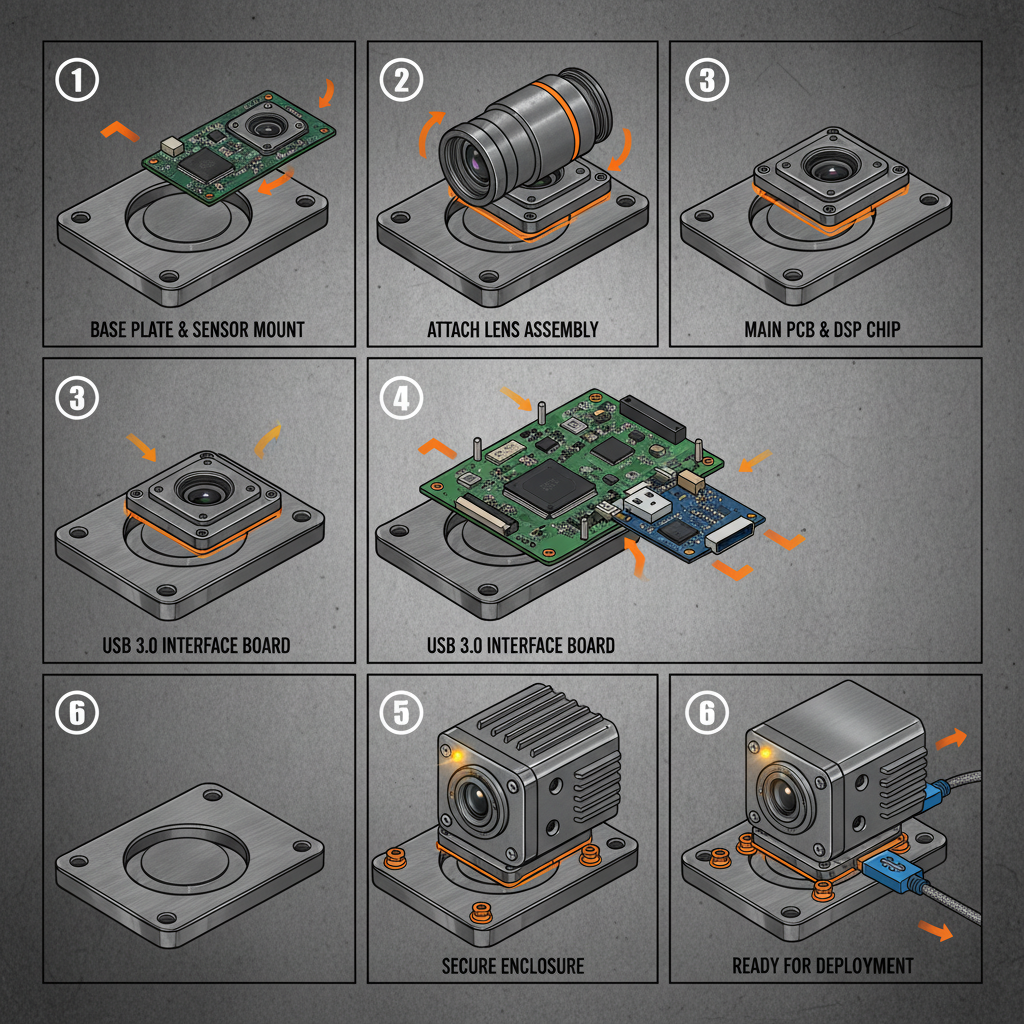
A standard webcam is a consumer-ready product with a plastic housing, a clip for monitors, and a built-in USB cable. A camera module, such as those offered by Shenzhen Minyou, is the internal electronic assembly (sensor, lens, and PCB). Modules are designed for OEM/ODM integration, allowing manufacturers to embed the visual system into their own products like kiosks, robots, or laptops.
Choose 2K if your primary goal is clear video conferencing via platforms like Zoom or Teams, as these platforms often compress 4K streams anyway. Opt for 4K if you are recording content for later playback, performing detailed visual inspections, or utilizing the camera for high-resolution facial recognition where every pixel counts for security accuracy.
Not necessarily. Integrated MEMS microphones are excellent for proximity voice capture, but they are susceptible to chassis vibration. For professional studio quality, a standalone condenser microphone is superior. However, for 90% of business and AI applications, an integrated solution provides the best balance of convenience and sufficient audio clarity.
Most consumer cameras use a "Rolling Shutter," which scans the image line by line, causing fast-moving objects to appear slanted. Global Exposure captures the entire frame simultaneously. This is essential for industrial environments where you are tracking fast-moving parts on a conveyor belt or using the camera for high-speed motion analysis.
It is a combination of both. Hardware-wise, it requires an IR (Infrared) camera alongside the RGB sensor to create a depth map of the face. Software-wise, it requires driver compatibility with the Windows biometric framework. Without the specific IR hardware, software alone cannot achieve the security level required for Windows Hello authentication.
Industrial-grade modules are designed for this. Many professional modules are rated for operation between -20℃ and 70℃. When deploying in such environments, it is crucial to ensure the lens material and the PCB coating are resistant to condensation and temperature fluctuations to prevent sensor failure or image fogging.
The decision to buy webcam with microphone components should be driven by a clear understanding of the final application. Whether it is a simple 0.3MP sensor for posture detection or a 4K module for high-end visual data, the synergy between the sensor, the lens, and the audio pickup defines the end-user experience.
As AI continues to merge with hardware, the focus will shift from "capturing" images to "understanding" them. Investing in flexible, OEM-ready modules allows businesses to adapt to these technological shifts without needing to redesign their entire hardware ecosystem.