engaged in camera related products' R&D, design and production



The global demand for camera modules is experiencing significant growth, fueled by the proliferation of smartphones, automotive applications, security systems, and industrial automation. Understanding the nuances of camera module price is crucial for businesses across various sectors, impacting product development, cost optimization, and overall market competitiveness. Fluctuations in component costs, manufacturing complexities, and technological advancements all contribute to the dynamic landscape of camera module pricing.
The importance of monitoring camera module price extends beyond individual companies. Global supply chains are interconnected, and disruptions in one area can cascade throughout the industry. Geopolitical factors, trade policies, and economic conditions all play a role in determining the affordability and availability of these critical components. Therefore, a comprehensive grasp of pricing trends is essential for effective risk management and strategic planning.
Ultimately, understanding the factors that influence camera module price enables informed decision-making, fosters innovation, and supports the development of cutting-edge technologies. From enhancing image quality in consumer electronics to enabling advanced vision systems in autonomous vehicles, the cost-effectiveness of camera modules is paramount.
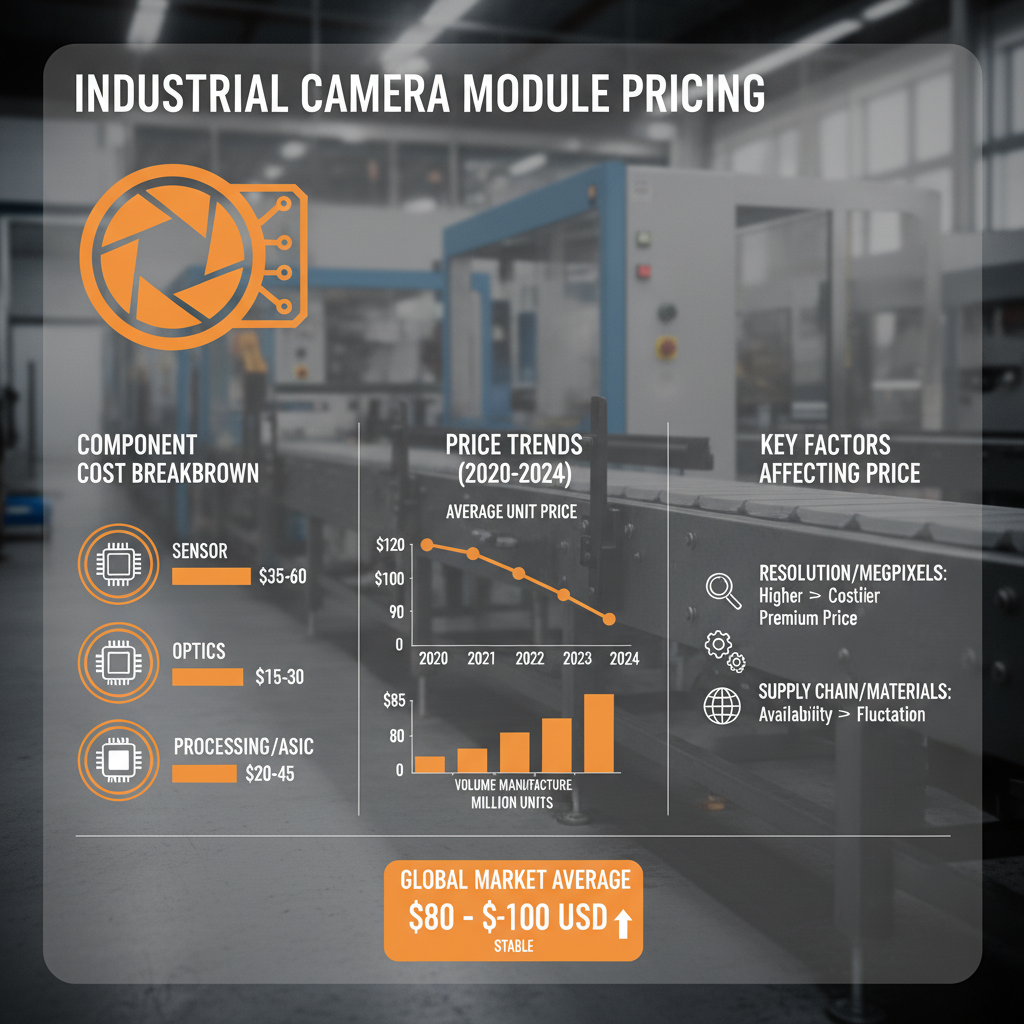
The camera module price isn't arbitrary; it’s a complex interplay of various factors. Raw material costs, particularly for image sensors and lenses, constitute a significant portion. Sensor technology, especially advancements in pixel size and resolution, directly impacts pricing. The demand-supply equilibrium also plays a vital role; increased demand often leads to price hikes, while oversupply can result in discounts.
Beyond materials, manufacturing processes and quality control are substantial cost drivers. High-precision assembly, rigorous testing, and adherence to industry standards all contribute to the final camera module price. Labor costs, particularly in regions with skilled manufacturing capabilities, also play a crucial role. Ultimately, understanding these core drivers is essential for businesses seeking to optimize their sourcing strategies and manage costs effectively.
Several factors significantly impact camera module price, including the cost of raw materials (image sensors, lenses), manufacturing complexity, technological advancements, demand-supply dynamics, and currency exchange rates. Global economic conditions and geopolitical events also play a crucial role. Understanding these variables is essential for effective cost management and sourcing strategies.
Generally, larger image sensors correlate with higher camera module prices. This is because larger sensors require more complex manufacturing processes, are more expensive to produce, and often offer improved image quality. Larger sensors allow for more light capture and better low-light performance, justifying the higher cost. The resolution of the sensor also factors in, with higher resolutions generally commanding a premium.
CMOS (Complementary Metal-Oxide-Semiconductor) and CCD (Charge-Coupled Device) are the two main types of image sensors. CMOS sensors are generally more affordable and widely used due to lower power consumption and ease of integration. CCD sensors traditionally offered superior image quality, but CMOS technology has significantly improved in recent years, closing the gap. Consequently, CCD sensors tend to be more expensive and reserved for specialized applications.
Businesses can mitigate price volatility through several strategies, including establishing long-term contracts with suppliers, diversifying their sourcing base, implementing robust inventory management systems, and staying informed about market trends. Building strong relationships with suppliers and engaging in strategic purchasing can also help secure favorable pricing and ensure a stable supply of camera modules.
The lens is a significant contributor to the overall camera module price. Lens quality – including aperture, focal length, and optical coatings – directly impacts image sharpness, clarity, and low-light performance. Precision-engineered lenses with advanced coatings are more expensive to manufacture. The complexity of the lens design also influences the price.
The integration of AI and computer vision capabilities into camera modules will likely lead to an initial increase in prices. AI processing requires more powerful and complex hardware, increasing module complexity and manufacturing costs. However, as AI technology matures and becomes more widespread, economies of scale may help to reduce prices over time. The demand for specialized AI-powered camera modules will continue to grow, driving innovation and potentially leading to new pricing models.
In conclusion, camera module price is a multifaceted issue shaped by technological advancements, economic forces, and global supply chain dynamics. Understanding these factors is critical for businesses seeking to optimize costs, drive innovation, and maintain a competitive edge in today's rapidly evolving technology landscape. From raw materials and manufacturing processes to market trends and future technologies, a holistic perspective is essential for making informed decisions.
Looking ahead, continued innovation in sensor technology, AI integration, and miniaturization will continue to shape the evolution of camera module pricing. Proactive supply chain management, strategic sourcing, and a commitment to sustainability will be key to navigating the challenges and capitalizing on the opportunities that lie ahead. Visit our website at www.szmyccm.com to learn more about our camera module solutions and how we can help you achieve your business goals.