engaged in camera related products' R&D, design and production



When designing specialized visual systems, engineers often face a conflict between integrated convenience and specific hardware requirements. Many industrial and commercial projects require high-quality imagery but must exclude audio capture to maintain security protocols, avoid acoustic interference, or utilize external professional microphones. This is where the demand for a cheap webcam without microphone becomes a strategic choice rather than just a budget constraint.
The exclusion of an onboard microphone allows for a more streamlined hardware architecture, reducing the potential for electronic noise and lowering the overall cost of the module. In the context of professional camera modules, such as 1080P or 4K variants, focusing solely on the optical sensor and the USB interface ensures that the device remains lightweight and compatible with a wider range of embedded systems. This approach is particularly vital for developers integrating vision into kiosks, AI-driven monitoring, or facial recognition terminals.
Navigating the balance between affordability and professional performance requires a deep understanding of sensor specifications and interface protocols. By analyzing the technical trade-offs and application needs, businesses can implement a cheap webcam without microphone that delivers high-definition clarity without unnecessary hardware overhead, ensuring a more efficient and secure deployment across various operating environments.


A microphone-free webcam is essentially a streamlined imaging device that focuses all its processing power and physical space on the CMOS sensor and the lens assembly. By removing the audio capture hardware, the device avoids the complexities of USB audio class drivers and the physical requirements of acoustic vents. This allows for a more compact, often dust-proof or sealed design, which is essential for industrial environments.
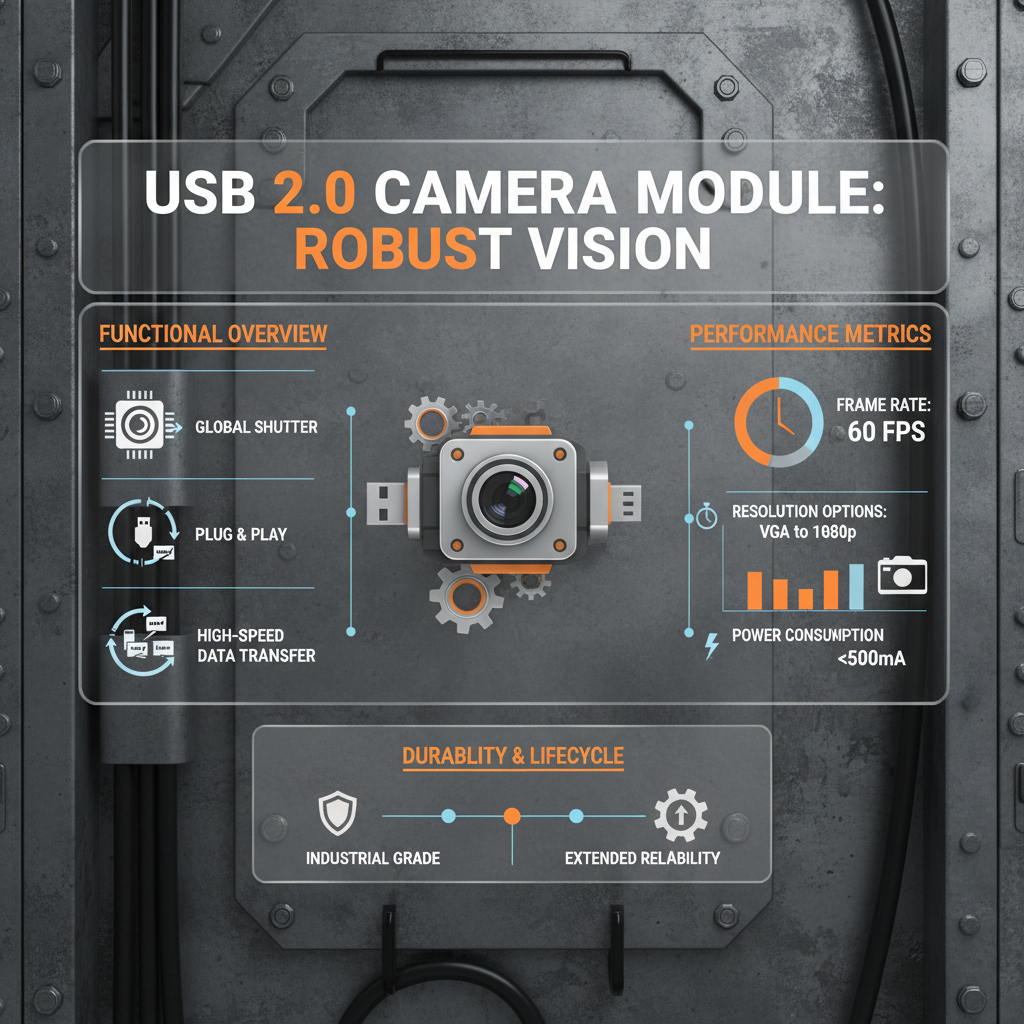
From a technical standpoint, these devices rely on standard UVC (USB Video Class) protocols, ensuring plug-and-play compatibility across Windows, Linux, and other operating systems. The hardware focuses on the transmission of raw or compressed video frames via USB 2.0 or 3.0 interfaces, eliminating the synchronization challenges typically associated with matching audio streams to video frames in high-latency environments.
When sourcing affordable vision hardware, the primary focus should be on the sensor's capability and the lens's focal properties. For a 1080P module, a fixed-focus lens is often sufficient for stable, distant viewing, whereas AF (Autofocus) modules are necessary for applications requiring variable distance scanning. The quality of the CMOS sensor determines the low-light performance and color accuracy, which are critical for professional-grade output regardless of the price point.
The true value of a budget-friendly module lies in its compatibility with standard UVC protocols and its ability to maintain a stable frame rate without overheating, ensuring long-term reliability in 24/7 embedded operations.
Furthermore, the physical interface—whether it be a standard USB connector or an FPC (Flexible Printed Circuit) cable—determines how the module integrates into the final product. For custom OEM/ODM projects, the ability to specify the lens angle and the sensor resolution allows companies to optimize the hardware for the specific field of view required by their software, preventing the waste of resources on unused features.
The decision to implement a camera without audio capabilities is often driven by security and efficiency. In high-security environments, such as government installations or sensitive corporate zones, the physical absence of a microphone eliminates the risk of unauthorized audio eavesdropping, simplifying the security audit process. This "hardware-level" security is far more reliable than software-based muting.
By eliminating the audio subsystem, manufacturers can reduce the unit cost and physical footprint, allowing for the integration of higher-resolution sensors—such as 2K or 4K modules—within the same budget constraints.
Additionally, purely optical modules are easier to maintain and protect. Without the need for microphone ports, the housing can be completely sealed against moisture, dust, and chemicals. This makes them ideal for automotive interiors, medical equipment, and outdoor kiosks where environmental protection is a priority over multi-modal communication.
Comparing different camera modules reveals a clear correlation between resolution and the bandwidth requirements of the USB interface. While a 0.3MP module is highly efficient for basic presence detection, 1080P and 2K modules offer the clarity needed for facial recognition and detailed monitoring. The choice of resolution directly impacts the processing load on the host system's CPU and the storage requirements for recorded footage.
For most commercial applications, the 1080P Full HD standard provides the optimal balance between image detail and system performance. Higher resolutions like 4K are reserved for specialized inspection tasks where microscopic detail is required. The following data illustrates the typical relative bandwidth usage across these common sensor types.
In the realm of AI-driven automation, these modules serve as the "eyes" of the system. For instance, in smart retail, a 1080P camera module without a microphone is used for gesture recognition and heat-mapping of customer movement, where audio data is irrelevant and could potentially violate privacy laws. The focus remains on the high-resolution image stream for accurate AI processing.
Similarly, in the medical field, these cameras are integrated into diagnostic tools and surgical assistants. The requirement here is for a clear, lag-free video feed that can be transmitted over USB to a monitoring station. By utilizing a specialized module with a wide dynamic range (WDR) or global exposure, these systems can operate under the harsh lighting conditions of an operating room without the interference of acoustic noise.
The industry is moving toward "Edge AI," where the camera module is no longer a passive sensor but a component of an intelligent system. We are seeing a shift toward AI Camera Modules that can perform basic object detection or sitting posture detection locally. This reduces the amount of data that needs to be sent to the server, improving response times and further emphasizing the need for optimized, single-purpose hardware.
Another significant trend is the integration of binocular and dual-lens systems for depth perception. By combining two 1080P sensors, systems can achieve 3D mapping and precise facial recognition (such as Windows Hello compatible hardware), which is far more secure than traditional 2D imaging. These advanced modules continue to omit microphones to prioritize the high-speed data transfer required for dual-stream video.
Looking forward, the adoption of USB 3.0 for higher-resolution 4K modules will become standard, enabling real-time high-fidelity streaming without compression artifacts. As these modules become more affordable, their application in low-cost consumer electronics and industrial IoT will continue to expand, driven by the need for reliable, specialized vision.
Integrating a vision module into a custom product involves overcoming several technical hurdles. The most common challenge is ensuring compatible power delivery and signal integrity over the USB cable, especially in environments with high electromagnetic interference. Proper shielding and the choice of a high-quality FPC cable are essential to prevent image flickering or connection drops.
Another hurdle is the optical alignment. Depending on the housing, a lens may need to be customized to avoid vignetting or to achieve a specific field of view. Working with an OEM manufacturer allows for the selection of specific sensor-lens combinations that match the mechanical constraints of the product, ensuring the focal point is correctly set for the intended distance.
Finally, software compatibility remains a key concern. While UVC is a standard, some specialized operating systems require specific driver configurations to unlock the full resolution or frame rate of the sensor. Testing the module across various Linux kernels and Windows versions is a critical step in the quality assurance process before mass production.
| Application | Recommended Resolution | Key Feature | Interface |
|---|---|---|---|
| Presence Detection | 0.3MP / 720P | Low Power | USB 2.0 |
| Facial Recognition | 1080P / 2K | High Contrast | USB 2.0/3.0 |
| Industrial Inspection | 4K / 8MP | Global Exposure | USB 3.0 |
| AI Tracking | 1080P | Wide Angle | USB 2.0 |
| Medical Imaging | 2K / 4K | WDR / AF | USB 3.0 |
| Kiosk Integration | 1080P | Fixed Focus | USB 2.0 |
Choosing a camera without a microphone is primarily done for security, cost reduction, and hardware specialization. It eliminates the risk of unauthorized audio recording in sensitive areas and allows the manufacturer to focus on optimizing image quality and reducing the physical size of the module. It is the ideal choice when using external professional audio equipment or when audio capture is prohibited by privacy laws.
Yes, most professional USB camera modules utilize the standard UVC (USB Video Class) protocol. This ensures they are plug-and-play compatible with Windows XP/7/8/10 and above, as well as most Linux distributions. No additional software or specialized drivers are typically required for the camera to function, making them easy to integrate into various computing environments.
Fixed-focus modules are designed to keep objects at a specific, pre-determined distance in focus, making them more durable and cost-effective for stable installations. AF (Autofocus) modules can dynamically adjust the lens to focus on objects at various distances, which is essential for applications like document scanning or interactive kiosks where the subject's distance varies.
Resolution should be chosen based on the level of detail required for your specific use case. 0.3MP to 720P is sufficient for basic motion or presence detection. 1080P is the industry standard for general video conferencing and basic facial recognition. 2K and 4K are necessary for high-precision industrial inspection or high-end security systems where zooming into the image is required.
Yes, professional manufacturers typically offer OEM/ODM services where you can specify the sensor resolution, lens angle (FOV), interface type (USB or FPC), and housing requirements. This allows the hardware to be perfectly tailored to the mechanical and technical constraints of your end product, ensuring optimal performance and a professional fit.
While the absence of a microphone doesn't inherently improve the pixels, it allows for a more efficient internal design. By removing audio components, there is less electrical interference on the PCB and more room for heat dissipation, which can lead to a more stable image stream and allow for the use of higher-performance sensors within a smaller, more affordable package.
Selecting a vision module that omits audio capture is a strategic decision that prioritizes security, reliability, and cost-efficiency. By focusing exclusively on optical performance, businesses can deploy high-resolution imaging—from 1080P to 4K—without the overhead and vulnerabilities associated with integrated microphones. Whether for industrial automation, AI-driven kiosks, or secure monitoring, the purely optical approach ensures a streamlined hardware integration.
Finding the right balance between resolution and cost requires a partner capable of providing precise technical specifications and customization options. For those looking to optimize their embedded vision systems with reliable, professional-grade camera modules, exploring the tailored solutions at https://www.szmyccm.com can provide the necessary hardware foundation for a successful and secure deployment.